
PAMERAN KINI
PAMERAN AKAN DATANG
PAMERAN LALU
- The Bouquet and the Wreath (Rebirth)
- The Plantation Plot (2026)
- ILHAM Art Show 2025
- Colorless, Odorless
- menggodam
- The Plantation Plot
- POLLINATION 4: the palms of y/our hands
- Ekin Kee Charles: Meet Us at the Ridge
- Boom Boom Bang: Play & Parody in 1990s K.L.
- A Night We Held Between
- Zhang Xu Zhan: Jungle Jungle
- Titik Garis Bentuk: Drawing as Practice
- Hsu Che-Yu: Three Episodes of Mourning Exercises
- Nirmala Dutt: Statements
- Timoteus Anggawan Kusno: Phantoms
- lift the tikar!
- Dream of the Day
- Projek 555
- ILHAM Art Show 2022
- Skola Gambar Enrique de Malacca
- Kok Yew Puah
- Bayangnya itu Timbul Tenggelam
- HOMEBODY
- KLPA 2020
- The Body Politic And The Body
- Domestic Bliss
- Fracture/Fiction
- Kuala Lumpur International Photoawards 2019
- Forgotten Thai Masters of Photography
- Chia Yu Chian: Private Lives
- Two Mountains Photography Project
- Latiff Mohidin: Pago Pago (1960 - 1969)
- we will have been young
- Patani Semasa
- GRUP 1957-1973
- ILHAM Contemporary Forum
- JP Soetardjo Menjawab Semua Soalan
- Afterwork
- Era Mahathir
- Love Me In My Batik
- Menggambar Negara
LAWATAN VIRTUAL
- The Plantation Plot
- Boom Boom Bang
- Titik Garis Bentuk
- Nirmala Dutt: Statements
- Dream of the Day
- ILHAM Art Show 2022
- Kok Yew Puah
- Bayangnya itu Timbul Tenggelam
- The Body Politic And The Body
FOTO PAMERAN


PAMERAN /
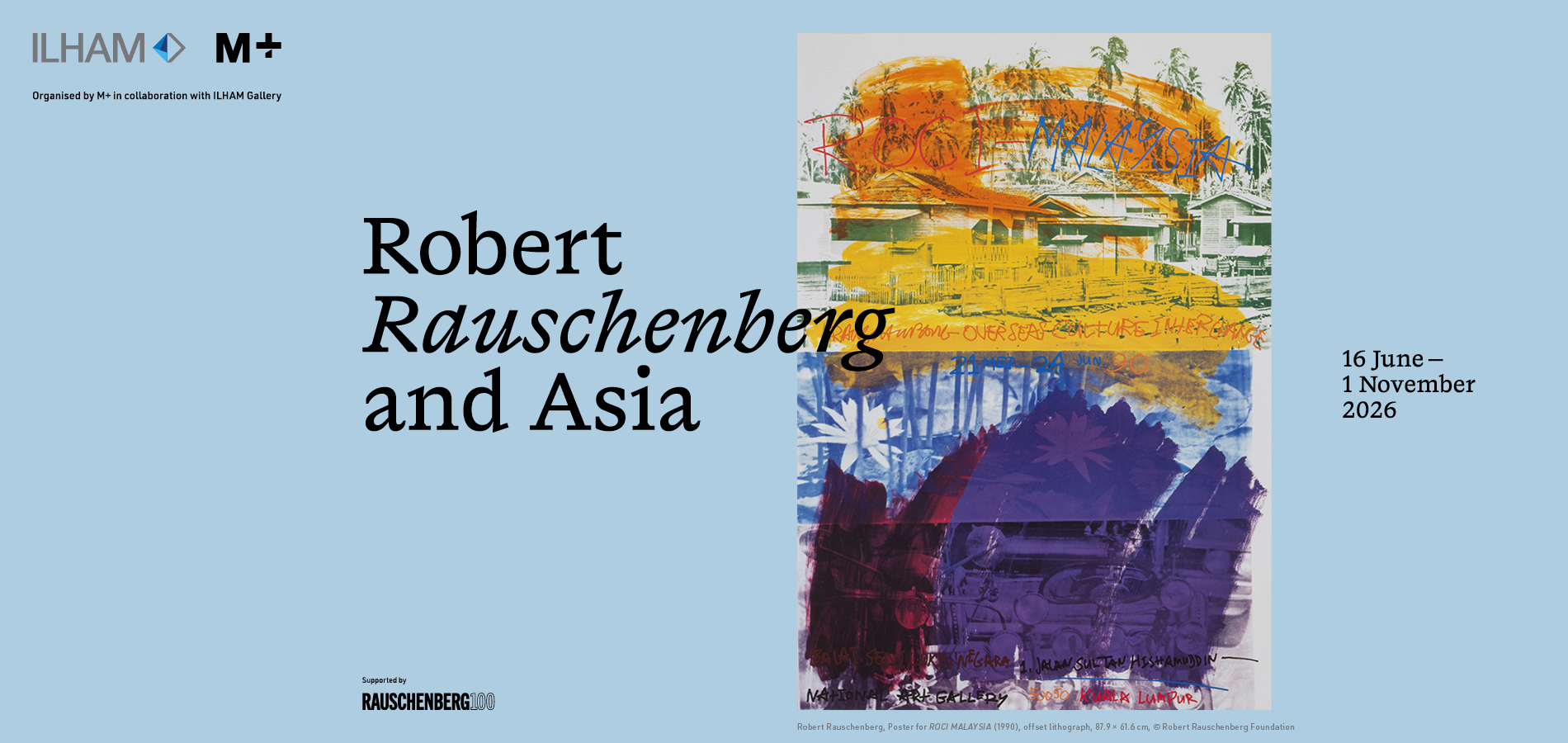
Robert Rauschenberg and Asia
16 Jun 2026 – 1 November 2026
Kami dengan sukacitanya mempersembahkan Robert Rauschenberg and Asia dari 16 Jun hingga 1 November 2026.
Pameran yang dianjurkan oleh M+ dengan kerjasama ILHAM Gallery ini merupakan tinjauan komprehensif yang pertama mengenai penglibatan Rauschenberg dengan Asia. Selepas kejayaan pameran ini di M+ di Hong Kong dari 22 November 2025 hingga 26 April 2026, pameran ini dibawakan ke Kuala Lumpur sebagai sebahagian daripada kerjasama antara kedua-dua institusi, dengan sokongan daripada Robert Rauschenberg Foundation di New York.
Robert Rauschenberg (1925–2008, A.S.) diiktiraf secara meluas sebagai salah seorang artis yang paling inovatif dan berpengaruh pada abad kedua puluh. Karya-karyanya menjadi pemangkin kepada pelbagai perkembangan penting dalam seni pasca perang seperti Seni Pop, Seni Konseptual dan seni instalasi. Melalui praktik seni yang bersifat eksperimental, beliau mentakrif semula konsep objek seni dengan menggabungkan objek harian dan imej media massa ke dalam karya-karyanya, sekali gus mengaburkan batas antara catan dan arca. Sebagai seorang pengembara yang gemar meneroka dunia, beliau memperoleh inspirasi daripada pengalaman berinteraksi dengan pelbagai budaya serta bekerjasama dengan artis dari seantero dunia. Rauschenberg melihat seni sebagai medium untuk memupuk persefahaman bersama dan menggalakkan perubahan sosial pada suatu ketika dunia masih belum saling terhubung seperti hari ini.
Pameran ini merupakan penerokaan komprehensif pertama terhadap pelbagai projek yang diusahakan oleh artis tersebut di Asia, dan menjadi sebahagian penting daripada sambutan global sempena ulang tahun ke-100 kelahirannya pada tahun 2025. Rauschenberg kerap mengunjung Asia, mencari sumber inspirasi baharu untuk karyanya sambil membina hubungan dengan artis, artisan, pengkritik seni, dan penaung seni di seluruh rantau ini. Antara tahun 1960-an hingga 1990-an, beliau mengunjungi pelbagai lokasi di seluruh benua Asia untuk tujuan pameran, kolaborasi, penyelidikan dan perjalanan peribadi, sambil mengumpulkan imej serta bahan yang kemudiannya diterapkan dalam karya-karyanya sehingga akhir hayatnya pada tahun 2008. Karya-karya yang diinspirasikan oleh Asia ini merangkumi asemblaj, arca, seni cetak, tekstil, fotografi dan lukisan, serta mencerminkan pendekatan Rauschenberg yang luas dan merentas pelbagai media, kandungan serta teknik.
Apa yang ditemui oleh Rauschenberg di Asia bukan sahaja kepelbagaian budaya dan landskap yang luar biasa, tetapi juga pendekatan yang segar dan berbeza terhadap penggunaan bahan. Daripada kesederhanaan dan keindahan fabrik yang dilabuhkan, hinggalah kepada gabungan tradisi kuno dan inovasi baharu dalam pembuatan kertas serta seramik, pengalaman ini memperkayakan perspektif artistiknya. Beliau juga menyaksikan masyarakat yang sedang mengalami transformasi pesat, dengan sistem birokrasi dan politik yang kompleks serta perkembangan pesat dunia seni kontemporari. Keterbukaan dan kesediaan beliau untuk berinteraksi dengan masyarakat serta tempat yang dikunjunginya lazimnya disambut baik. Namun, sebagai seorang artis Amerika yang terkenal pada ketika globalisasi seni masih di peringkat awal, beliau turut berhadapan dengan pelbagai reaksi yang bercampur antara keterujaan, rasa ingin tahu dan kecurigaan.
Manifestasi yang paling terkenal dalam penglibatan beliau dengan Asia adalah Rauschenberg Overseas Culture Interchange (ROCI), sebuah pameran yang menjelajah ke pelbagai lokasi antara tahun 1985 hingga 1991. Projek yang dibiayai dan diusahakan sendiri oleh Rauschenberg ini merangkumi pameran di lima bandar di Asia, termasuk Kuala Lumpur. Beliau merupakan artis kontemporari Barat pertama yang mengadakan pameran solo berskala besar di China, USSR dan Malaysia pada era perubahan global yang pesat.
Sempena ulang tahun ke-100 kelahiran Rauschenberg dan empat puluh tahun sejak pameran ROCI pertama di Asia, inilah masanya untuk meneliti bagaimana pengembaraan tersebut memperluaskan kemahiran artistiknya serta bagaimana beliau diterima oleh artis dan komuniti yang ditemuinya. Dalam dunia yang semakin menjauh daripada keterhubungan global yang diperjuangkannya dan semakin cenderung kepada bentuk nasionalisme yang lebih tegar serta lantang, pameran ini turut mengajak kita untuk mempertimbangkan semula gagasan Rauschenberg mengenai dialog rentas budaya dan pertukaran artistik, ketika dunia yang semakin luas diundang masuk ke dalam alam kreatifnya.
Robert Rauschenberg and Asia dikurasi oleh Russell Storer, Kurator Kanan dan Ketua Hal Ehwal Kuratorial, M+.
Persembahan pameran di ILHAM Gallery pula dikurasi bersama oleh Rahel Joseph, Pengarah Galeri ILHAM.
Lihat Program-Program Robert Rauschenberg dan Asia di sini
Lembaran Kerja Pelajar
RAUSCHENBERG100
Pegangan teguh Robert Rauschenberg (1925–2008) bahawa penglibatan dengan seni mampu memupuk kepekaan manusia sebagai individu, anggota masyarakat, dan warganegara merupakan teras kepada falsafah hidupnya. Sambutan ulang tahun ke-100 ini bertujuan memberi peluang kepada mereka yang lama mengenali karya beliau, mahupun mereka yang baru pertama kali mengenalinya, untuk membentuk perspektif baharu terhadap hasil seninya.
Satu siri aktiviti dan pameran global sempena ulang tahun ke-100 Rauschenberg menilai semula sumbangan beliau melalui lensa kontemporari, sambil mengetengahkan pengaruh berterusan beliau terhadap generasi artis serta pendukung kemajuan sosial. Pengaktifan legasi Rauschenberg melalui sambutan ini menggalakkan penerokaan rentas disiplin dan membuka ruang kepada dialog kritikal.
M+ MUSEUM
M+ ialah sebuah muzium bertaraf global yang memberi tumpuan kepada budaya visual kontemporari Asia. Terletak di West Kowloon Cultural District (WestK), Hong Kong, muzium ini berperanan mengumpul, mempamerkan dan mentafsir seni visual, reka bentuk dan seni bina, imej bergerak, serta budaya visual Hong Kong pada abad kedua puluh dan kedua puluh satu.
Bangunan ikonik M+ yang terletak di persisiran Victoria Harbour direka oleh firma seni bina terkenal dunia Herzog & de Meuron dengan kerjasama TFP Farrells dan Arup. Bangunan ini meliputi keluasan keseluruhan 65,000 meter persegi dan menempatkan tiga puluh tiga galeri, di samping Learning Hub, Moving Image Centre, Research Centre dan Roof Garden, serta pelbagai ruang program dan acara lain.
Fasad M+ merupakan salah satu skrin LED terbesar di dunia yang memaparkan karya seni tempahan khas pada latar langit Hong Kong setiap malam. Muzium ini memelihara koleksi tetap multidisiplin yang merangkumi objek dari seluruh Asia dan rantau lain. Antara koleksi utamanya ialah M+ Sigg Collection, yang merupakan salah satu koleksi seni kontemporari China paling komprehensif di dunia.
Hari ini, M+ berfungsi sebagai pusat penting bagi penyelidikan dan persembahan budaya visual kontemporari, sekali gus mencetuskan pemikiran, penemuan dan rasa ingin tahu dalam kalangan khalayaknya.


2015-2026 © ILHAM GALLERY. ALL RIGHTS RESERVED. WEB DESIGN BY TOMMY NG